uPVC or Aluminium Bifold Doors: Key Factors for UK Buyers
When choosing bifold doors for your home, one of the first decisions you’ll need to make is the material: uPVC or aluminium. Both are already a fixture in UK homes, each with their own specific advantages for modern living areas. Aluminium bifold doors are particularly popular for their smart style and durability, and uPVC is a cheaper alternative. In this article, we take a look at how to pick between uPVC and aluminium bifold doors, to help you weigh up the variables that are most important to you, such as durability, appearance, price and performance, so that you can discover the right bifold doors for your property.
Material Basics Are Understood
Aluminium bifold doors are made from a lightweight but very robust metal alloy, allowing for larger panels and smaller frames without compromising structural integrity. This material is naturally corrosion resistant making it excellent for the UK’s often changing weather from coastal humidity to inland rain. uPVC bifold doors are made from unplasticised polyvinyl chloride, a stiff plastic composite with internal steel reinforcement for extra strength. With low maintenance requirements, uPVC bifold doors are a popular choice, but aluminium bifold doors are often more durable and can endure for 40 years or more with minimal care.
Which one you choose depends on how exposed your home is to the elements. If you reside in a coastal region such as the South West or East Anglia, aluminium bifold doors are excellent as sea air encourages damage but they have powder-coated surfaces that are resistant to pitting and fading. U-PVC bifold doors are coated with UV stabilisers but can become brittle after decades of harsh sun or frost. In urban or suburban areas with less harsh weather, uPVC bifold doors are a good choice, providing a robust entrance point without the premium price tag. Aluminium bifold doors also allow for bespoke colour choices that will not chip or flake, ensuring a new appearance all year long.
Aesthetics and Design Freedom
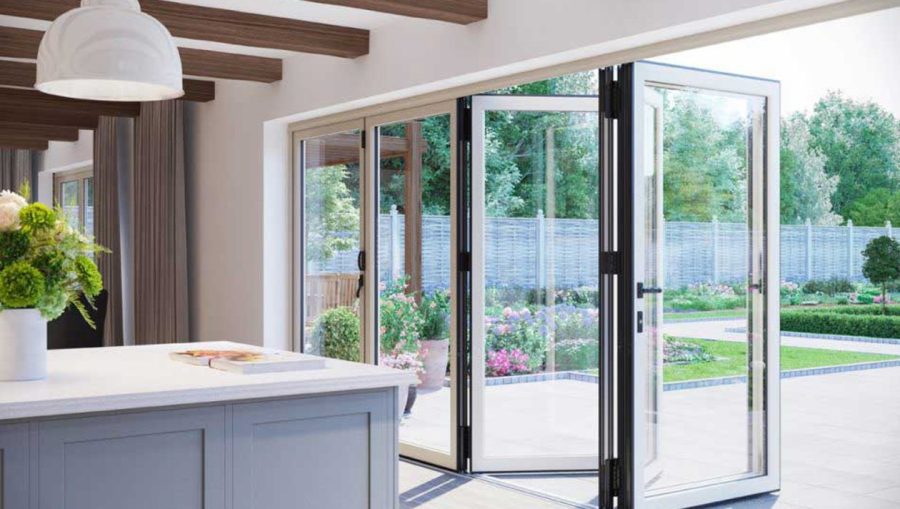
The visual appeal is a key factor when choosing bifold doors and aluminium bifold doors really excel in this area. Their slimline profiles – frequently just 100mm or less – optimise window area, filling homes with natural light and creating an indoor-outdoor flow. It is ideal for modern expansions, open-plan kitchens or garden spaces where you desire unbroken views. Aluminium bifold doors can be up to 7 metres wide with several doors folding away neatly opening full walls.
In comparison, uPVC bifold doors tend to have a thicker frame of roughly 120-150mm which can affect the glass to frame ratio slightly. Modern production has made them slimmer, but they still have a more classic look, perfect for period properties or conservative designs. If your property boasts traditional brickwork or timber features, uPVC bifold doors complement them beautifully without dominating the building’s character. Aluminium bifold doors are a good fit for minimalist modern structures, with anthracite grey or black finishes to match glass-heavy facades. Think on the style of your property – aluminium bifold doors will add to a modern urban feel, while uPVC gives a more adaptable, low-key appeal.
Thermal Efficiency & Energy Savings
The UK is seeing escalating energy expenses and insulation is a must. Aluminium bifold doors include sophisticated thermal breaks – polyamide strips to stop the cold conducting through – with U-values down to 1.3 W/m²K, similar to or better than many uPVC variants. Aluminium bifold doors, combined with triple glazing, will keep your home warm in the winter and cool in the summer, perhaps reducing your energy expenditures by 15-20%. They also have sturdy seals and waterproof gaskets that further increase effectiveness against drafts.
The uPVC used for bifold doors is a good insulator by nature as the material has a low thermal conductivity. Bifold doors with double glazing can achieve U-values of roughly 1.4-1.6 W/m²K. They are a great option for moderate climates but aluminium bifold doors give better edge insulation in older homes with single glazing improvements. Aluminium bifold doors with low-emissivity glass offer greater long-term efficiency for eco-conscious homes wanting to achieve Passivhaus requirements. Consider your local climate: If you live in the colder parts of Scotland, aluminium bifold doors are the way to go; in the milder south of England, uPVC will do the job at a lower cost.
Security and durability concerns
Bifold doors provide wide openings and hence need a high level of security. Aluminium bifold doors are extremely strong and offer more protection against forced entry than uPVC because of their stiff frames and multi-point locking systems (usually 8-10 hooks per panel). They are less likely to flex or warp when under strain and are perfect for ground-floor installations. Powder coated for an additional protection against impacts and scratches.
uPVC bifold doors are no slouches, with reinforced cores and comparable locking systems, and they are Secured by Design requirements. However with time uPVC might get yellow, or be vulnerable to impact damage in busy locations. Aluminium bifold doors are heavier, but the strong tracks can cope with daily use without a problem, even in busy family homes. If you’re concerned about burglary rates in your postcode – check local crime stats – the inherent toughness of aluminium bifold doors gives you peace of mind. If you are after lightweight, easy to handle choices for low risk bungalows then uPVC bifold doors are completely secure.
Budgeting and Cost Analysis
Often budget is a factor and uPVC bifold doors are the most cost effective. A conventional 4-panel uPVC set would cost £2,500-£4,000 supplied and fitted, compared to £4,000-£7,000 for equivalent aluminium bifold doors. The savings up front make uPVC appealing for upgrades on a limited time line. Both require little maintenance, but the longevity of aluminium bifold doors implies fewer replacements over decades.
Installation prices vary slightly but for wider spans aluminium bifold doors may require stronger lintels. Aluminium bifold doors have a good resale value, adding as much as 5-10% to the desirability of property in premium locations such as London or the Home Counties. Consider ownership: uPVC bifold doors are good for short-term flips, and aluminium bifold doors give ROI for long-term residence. With inflation starting to cool down in 2026’s economy, investing in aluminium bifold doors is a hedge against future energy price rises.
Durability and Maintenance
Both are low maintenance but the devil is in the details. Aluminium bifold doors are easy to maintain, all it takes is a quick wipe with soapy water. They have factory applied coatings that self clean in rain. Stainless steel tracks and hinges won’t corrode in the damp of a UK garage or conservatory. Like all uPVC products, bifold doors are wipe-clean but avoid harsh cleansers as these can cause micro-scratches which attract dirt.
Aluminium bifold doors last far longer (20-30 years) and have guarantees of up to 25 years. uPVC bifold doors endure 25-35 years however seals may need replacing sooner in sunny locations. Aluminium bifold doors are really at their best in holiday homes or rental properties where you just set it and forget it. Precision manufacture of aluminium bifold doors minimises wear but regular lubrication of rollers maintains both gliding smoothly.
Environmental Impact and Sustainability
UK shoppers are more focused on sustainability. Aluminium bifold doors are 100% recyclable and 95% of recycled content is used in current production minimising carbon footprints. They last longer than uPVC which is recyclable but made from petroleum based manufacturing. Both have A+ energy ratings, however aluminium bifold doors are less efficient and reduce lifetime emissions.
Aluminium bifold doors are also more aligned with green certifications such as BREEAM, thanks to their modular architecture, making upgrading easier. uPVC bifold doors with modern formulae that include lead-free stabilisers are attracting affordable eco-upgrades. If your decision is led by net-zero goals, aluminium bifold doors are a part of the circular economy.
Making Your Final Choice
Ultimately, the choice between uPVC and aluminium bifold doors comes down to what you want from your doors. If you’re looking for budget and tradition, uPVC is the way to go. If you’re looking for premium performance and contemporary, aluminium bifold doors are the better option. Measure your home’s size, location and use. Measure openings properly. Verify structural requirements with local building codes. Aluminium bifold doors are suitable for forward-thinking UK homes, transforming interiors with their elegance and efficiency. Touch and vision; trial examples. Draw to envision. Whatever you select, skilled installation means decades of enjoyment. Aluminium bifold doors are the prudent, future-proof purchase for most people.