Navigating Your Initial Consultation for a Hair Transplant in London
Making the decision to have a surgical surgery to restore losing hair is a transforming experience that combines emotional anticipation and personal involvement. When looking at choices for a hair transplant, London has an especially high concentration of qualified medical personnel and cutting-edge facilities. However, given the vast variety of options in the capital, prospective patients must approach their initial appointments with clarity, care, and a well-prepared set of questions. Choosing the correct clinical environment and practitioner necessitates going beyond the surface marketing to comprehend surgical technique, medical qualifications, long-term strategy, and realistic postoperative expectations. Individuals who enter a consultation with targeted, probing enquiries can ensure they make a safe, fully informed decision that matches with their personal aesthetic goals.
The first critical area of investigation is the specific credentials, registration, and direct involvement of the person executing the surgery. Prospective customers frequently expect that the practitioner who conducts the initial consultation will be the exact clinician who performs all aspects of their procedure. In actuality, clinical arrangements vary greatly, thus it is critical to establish who will oversee each aspect of the procedure. You should question your practitioner whether they are completely registered with relevant British medical bodies and if hair restoration is their primary full-time clinical speciality. Enquiring about the number of years they have spent practising committed hair restoration and requesting to see a portfolio of previous work establishes a baseline of experience.
Furthermore, it is critical to determine the exact division of labour during the procedure. A standard hair transplant London consultation should contain a clear description of who performs essential surgical phases such as local anaesthesia administration, follicular unit extraction from the donor zone, and recipient incision creation. You must enquire whether technicians or assistants handle or implant grafts, and what specific skills those team members possess. Understanding whether your chosen surgeon will personally design the hairline, perform every incision, and monitor staff throughout the day ensures that high professional standards are routinely met.
Another important topic is about the surgical treatments that are indicated for your individual pattern of hair loss. Follicular Unit Extraction and Follicular Unit Transplantation are the two most common methods used globally and in major clinics. Before prescribing a specific method, specialists in hair transplant London should thoroughly assess your scalp characteristics, hair density, donor capacity, and personal lifestyle. You should question why one strategy is preferred over another in your instance. Ask the practitioner how they aim to reduce scarring, protect the fragile donor bank from overharvesting, and improve graft survival rates once removed from the body.
Equally important is determining whether you are a suitable candidate for surgical surgery at this time. A responsible clinician will consider age, scalp flexibility, family history of pattern baldness, and the consistency of your current hair loss. You should ask your practitioner for an honest assessment of whether your hair loss has steadied or if additional non-surgical treatment is required before any surgery. Enquiring about the hazards of operating on an unstable hairline helps to avoid unnecessary surgeries that may result in unnatural outcomes when natural loss progresses around transplanted grafts.
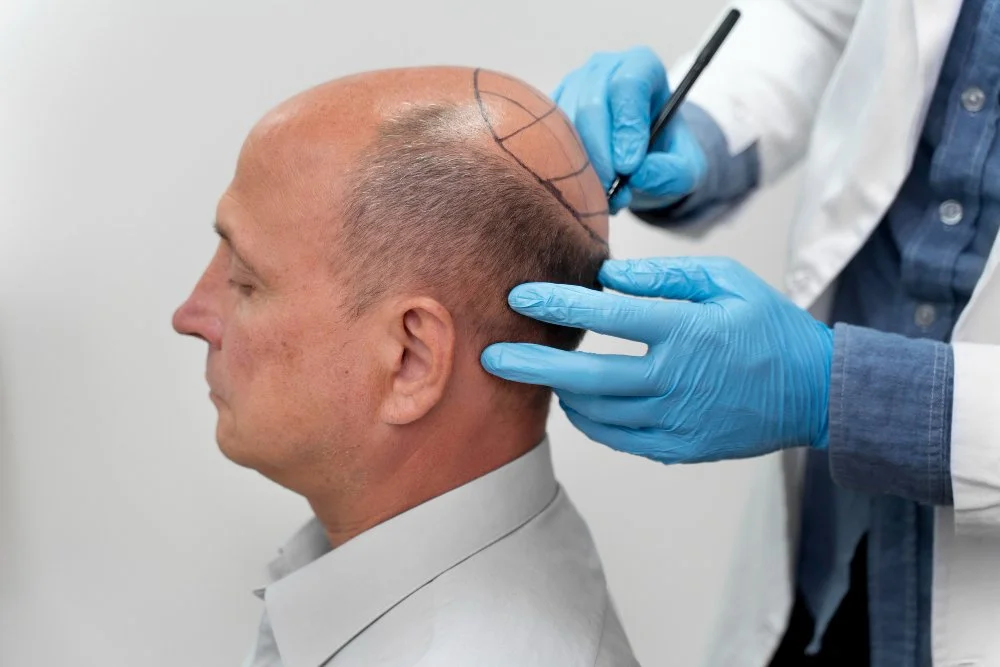
A successful conclusion is as dependent on artistic vision and long-term planning as it is on technical accuracy. Hair loss is progressive, therefore a style developed today must look natural and balanced for decades to come. Experts should consider facial symmetry, bone structure, age-appropriate proportions, and predicted future loss while discussing design alternatives for a hair transplant London. You should enquire how the practitioner determines the placement and density of the hairline. Requesting a physical demonstration or drawing on your scalp during consultation allows you to visualise the proposed framework and voice your preferences before it is finished.
In addition to immediate visual design, you should enquire about how the surgeon intends to conserve your limited supply of donor hair for potential future demands. Every patient has a limited supply of healthy donor grafts accessible for harvesting. You should ask your clinician to calculate your entire lifetime donor supply and clarify how many grafts are planned for this session versus how many are still in reserve. Asking if more treatments are required as you age ensures that you do not deplete your donor zone prematurely, leaving future thinning unresolved. A well-thought-out long-term master plan is an indicator of high-quality clinical treatment.
Financial concerns are undoubtedly an important part of the decision-making process, but analysing quotes necessitates a thorough comprehension of what is covered. Fees might vary greatly, and ambiguous language such as graft numbers versus individual hair counts can lead to uncertainty. Consultations should be completely transparent when enquiring about financial specifics for a hair transplant London. You should get a detailed breakdown of the entire charge, indicating whether it includes all preoperative screening, surgical facility fees, medicine, postoperative care kits, and follow-up appointments. It is critical to clarify if graft estimates are for individual hair follicles or follicular units, as a single unit often comprises one to four individual hairs.
It is also prudent to enquire about clinic rules concerning transplant survival and probable problems or modifications. Ask your surgeon about their normal transplant survival rate and how they measure these metrics. Enquire about what happens if growth yields fall severely short of reasonable medical expectations, or if an infection develops. Enquire whether there are official protocols for secondary touch-up appointments, what criteria apply to such care, and whether additional expenses will be imposed. Clear, formal definition of these financial and medical policies avoids unanticipated misunderstandings in the future.
The journey to full restoration does not end when you leave the operating room; adequate aftercare and patience are essential for achieving optimal development. Before committing to a date, you should ask specific questions about the recovery process and the amount of postoperative care given. Patients should understand how many days of downtime will be required before returning to work, exercising, or attending social events after a hair transplant London. You should enquire about the exact aftercare recommendations you will need to follow during the important first two weeks, such as how to wash your scalp, sleep comfortably without upsetting the new grafts, and avoid inadvertent stress.
Furthermore, enquire about the exact plan for follow-up visits and who will conduct them. Will you meet with your operating surgeon one week, three months, six months, and twelve months after surgery, or will these checks be transferred to staff? Enquiring about the predicted timescale for progress helps to establish appropriate expectations. The great majority of transplanted hair shafts shed during the first month owing to shock, with new growth beginning around the third or fourth month and lasting between twelve and eighteen months. Asking your doctor to explicitly describe this timeline will help you remain calm during the lengthy healing process.
Patient safety should always be the top priority when undertaking any surgical treatment. You should ask detailed questions about the medical infrastructure, infection control standards, and emergency preparation of the hospital. Clinical safety for a hair transplant London requirements require that surgical facilities carefully adhere to national health rules and hygiene procedures. You should enquire whether the facility is formally accredited and inspected by local health authorities, and request to see certificates or documentation showing compliance with clean room laws.
You should also ask your surgeon about the processes in place in case of a medical emergency during surgery. Enquire about clinical staff emergency training, the presence of resuscitation equipment on-site, and any existing arrangements with surrounding hospitals. Enquire about the steps taken to prevent postoperative infections and how emergency enquiries are handled outside of regular operating hours. Knowing that you may contact a competent medical professional immediately on a dedicated phone line at midnight if you encounter sudden swelling or bleeding gives you enormous peace of mind during your recuperation.
Committing to hair restoration is a very personal decision that, when done properly, may restore self-confidence and invigorate your personal appearance. Taking the time to arrange thorough meetings, ask extensive questions, and critically assess responses is the single most effective method to assure a safe and enjoyable encounter. When looking for a high-quality hair transplant, London is an excellent choice, as long as you conduct sufficient research and have clear expectations.
Prioritising surgeon credentials, personal engagement, open pricing, long-term donor management, and stringent safety standards enables you to select a clinical partner who values your safety and shares your aesthetic goal. Never feel pushed to sign agreements or pay deposits before receiving positive responses to all of your list items. A good doctor will always welcome serious enquiries, encourage second viewpoints, and devote the time required to ensure that you are completely confident in your decision. Armed with the necessary knowledge and guidance, you may embark on your hair restoration journey with complete peace of mind and realistic excitement for what lies ahead.